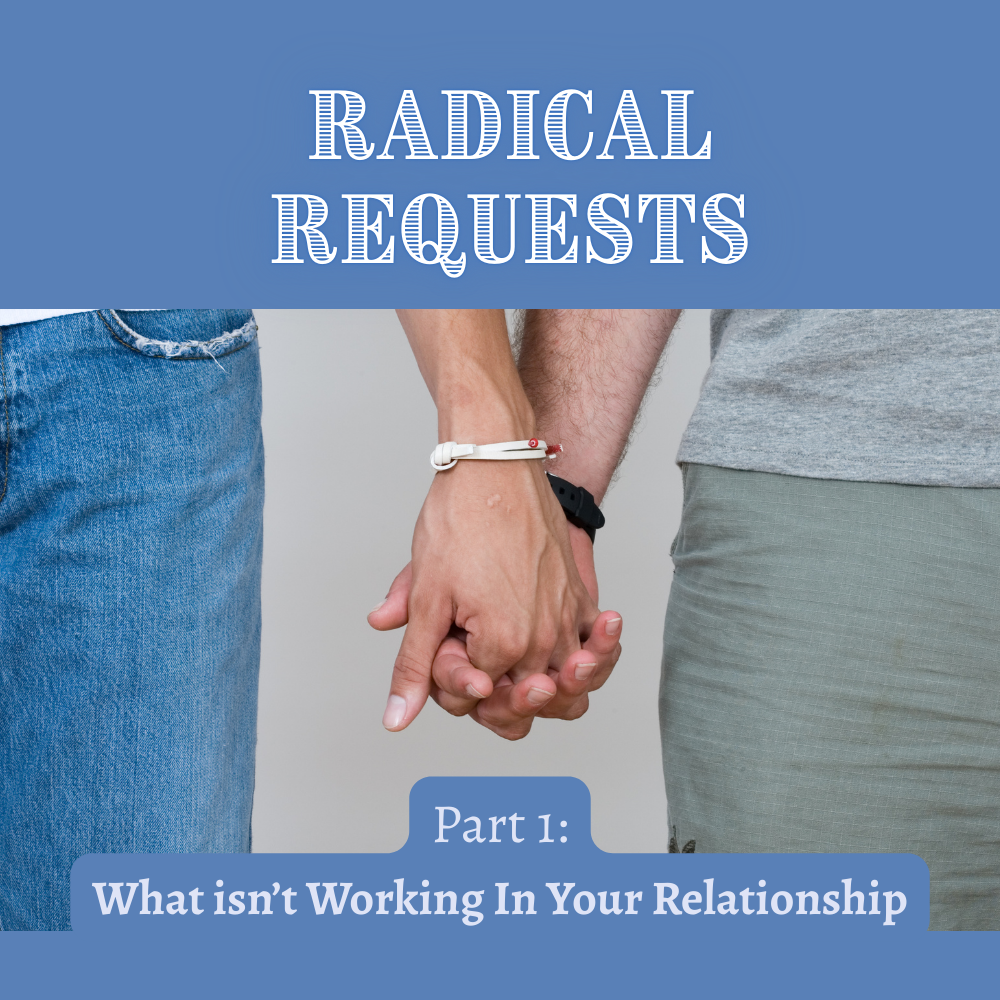
Radical Requests- Part 1: What Isn't Working In Your Relationship
The Quiet Ache of a “Good Enough” Relationship
So, your relationship is okay.
But there’s tension.
There’s resentment.
Needs are going unmet.
You don’t want to leave — your person is good. But it doesn’t seem to get better. That gnawing feeling of disappointment lingers.
Now, I believe 1000% in leaving a bad relationship.
If someone is treating you terribly, get out of there.
But many of us are in good-ish relationships — ones where small grievances quietly pile up over time.
“Why doesn’t she ever initiate?”
“Can’t he tell I’m sad and need extra attention today?”
“Why do I always have to plan dates?”
This isn’t about abusive or neglectful partners. It’s about two well-intentioned people who love each other but are missing each other in communication. People who want the best for one another but haven’t yet learned how to express their needs clearly and compassionately.
The Myth of the Noble Sufferer
When I was younger, I always sided with the quiet one — the long-suffering partner who put up with too much. I felt righteously indignant on their behalf.
Because I was that person.
I thought my patience and silence made me morally superior.
“I’m not the problem — I’m the one being mistreated,” I’d tell myself.
But over time, I had to face something hard: my silence wasn’t noble. It was avoidance. It was fear disguised as virtue.
Where Does This Come From?
If you relate, I want to invite you to reflect on a few questions:
What was the dynamic between your parents?
Which one did you side with?How were your requests met as a child?
Were they accommodated, ignored, guilted, or punished?How do you get what you need from others now?
Do you ask directly, hint, withdraw, or keep score?
Common Roots of Avoidance
You might recognize yourself in some of these patterns:
One parent was dominant, the other disappeared — You sided with the underdog or so the other as a villain.
Your requests as a child were seen as disobedience or selfishness.
Your emotions triggered guilt, defensiveness, or even danger from your parent.
You learned that having needs wasn’t safe in your household.
You were rewarded for being the “easy child.”
As an adult, that conditioning can show up as:
Pouting when things don’t go as hoped.
Shutting down when asked what’s wrong.
Overgiving and keeping score to justify your needs later.
It’s painful to realize, but this quiet martyrdom isn’t connection. It’s protection.
And ironically, it’s one of the biggest barriers to intimacy.
The Radical Truth
Here’s the truth that changed everything for me:
If you want your partner to treat you differently — to meet your needs — you have to ask.
That’s the radical part.
Because for many of us, asking feels dangerous, selfish, or humiliating.
But real love can’t exist without truth.
Radical requests are how you bridge the gap between quiet resentment and genuine intimacy.
In the next post, I’ll share how to actually make radical requests — clearly, kindly, and courageously — even when it feels uncomfortable.
A strong relationship is not built by default. It’s built on purpose.
The Alchemy Lab workbook series gives you structured, meaningful prompts to strengthen communication, deepen connection, and create a relationship that feels more like both of you.